

 Toos and Nape, the Scarlet Macaw Parrots that made us rethink parrot conservation
City Parrots advocates responsible synurbanisation of parrots and fights against eco-xenophobia towards urban parrot populations
Synurbanisation
Synurbanisation is the evolutionary process whereby animals adapt to living in urban areas. The conservation of endangered species stands to benefit from this process as many natural areas are shrinking and urban areas are increasing. Species that learn to live in cities break the cycle of ever-decreasing habitat and population decline.
Parrots are prone to synurbanisation as nearly one hundred species are known to maintain populations in urban areas. City Parrots advocates responsible synurbanisation of parrot species to aid their conservation. Such projects are preferably implemented in areas where the individual parrot species are native. We do however also recognise the conservation value of existing urban parrot populations that occur outside their native range.
 Yellow-headed Amazon parrots at a park in Stuttgart. This species is endangerd in native Mexico but Stuttgart, in Germany, harbours a growing population.
Eco-xenophobia
The term ‘Eco-xenophobia’ was coined to stress the idea that we are making judgments not through objectively supported science but through mistaken ideas of what is native, what is alien, and hence what is good or bad. In the case of parrots please keep it based on facts. There are hundreds of introduced parrot populations in cities around the world. Many of them are not native to the region they have been introduced to. But this does not automatically mean they are a problem.
City Parrots encourages research into the impact of urban parrot populations. There where this research has been done the conclusion has been their ecological and agricultural effects are negligible. You don’t need to like parrots, it is indeed annoying when they wake you up on a Sunday morning just when you planned to sleep in. But that’s not sufficient reason to demand their destruction. Arguing “they just don’t belong here” makes one a “nativist” not conservationist.
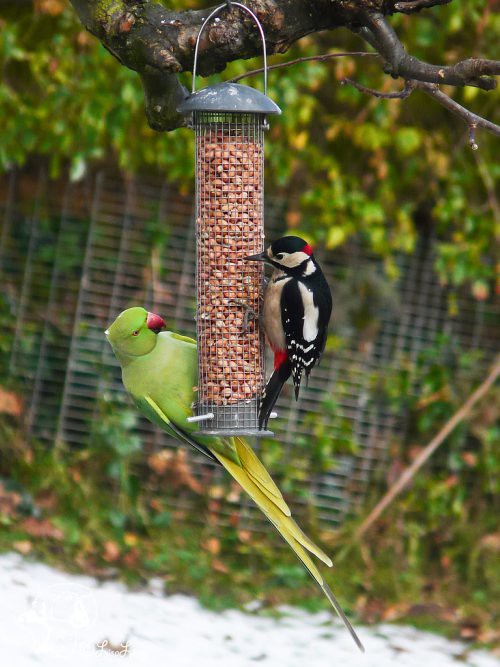 Woodpeckers are often mentioned as suffering from the presence of Indian Ring-necked parakeets. Several studies however have shown that there is no impact on woodpeckers. Not surprisingly as these species also occur together naturally in Asia. Image by Lisa Long.